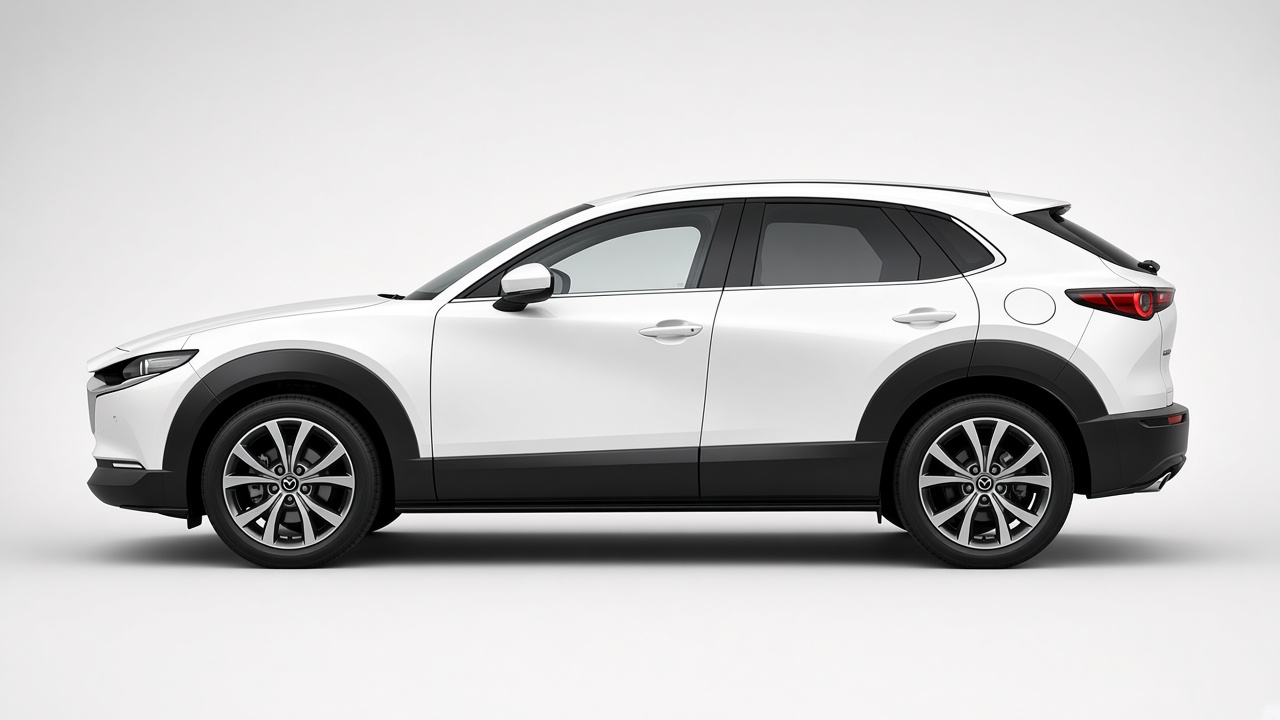
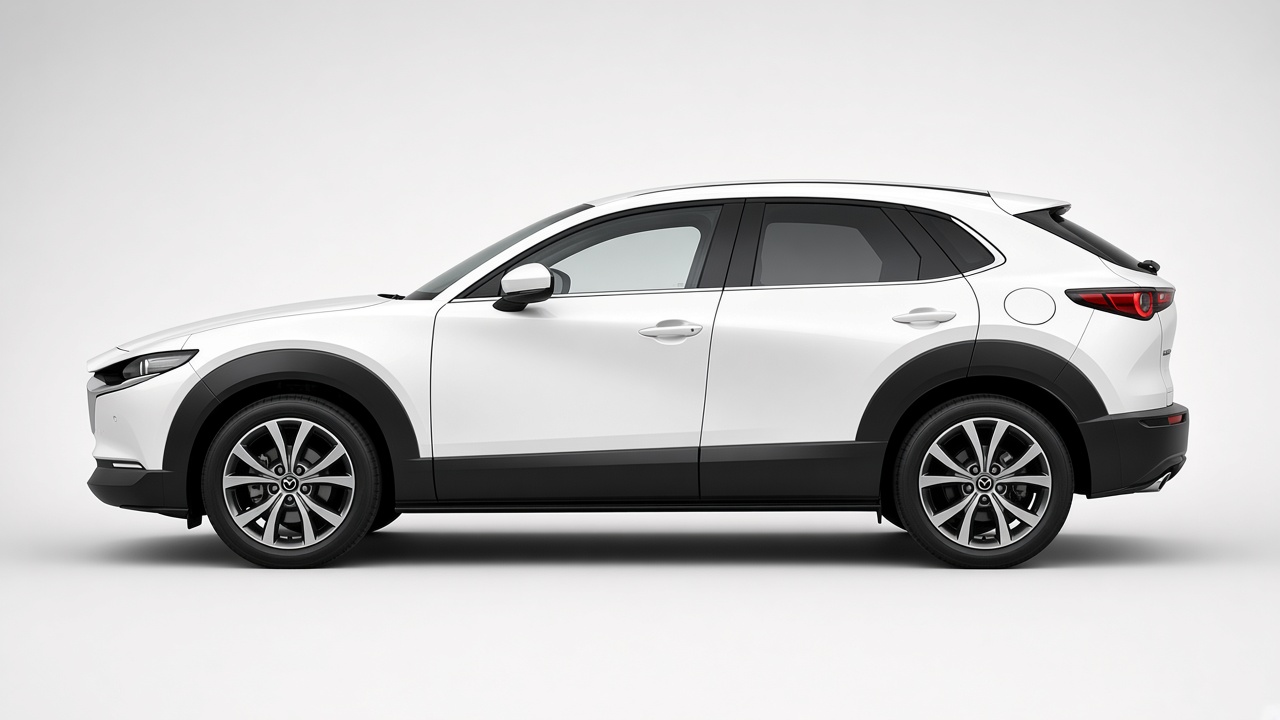
2026 Mazda CX-5 G25 Pure AWD
After nearly 10 years, Mazda’s best-selling car globally – the CX-5 – has entered a new generation, offering more space and new technology, but crucially, no hybrid options at launch.
We’ve jumped behind the wheel of the most affordable grade in Australia to see if this is all the CX-5 you really need, or whether you’d be better off spending your money on a higher grade – or something else.
The 2026 Mazda CX-5 G25 Pure AWD starts from $39,990 before on-road costs, $2750 more than the outgoing entry-level grade.
However, the outgoing G20 Maxx had a sluggish 2.0-litre four-cylinder petrol engine and front-wheel drive, whereas the new G25 Pure offers a larger 2.5-litre four-cylinder petrol engine and all-wheel-drive.
| Key details | 2026 Mazda CX-5 G25 Pure AWD |
| Price | $39,990 plus on-road costs |
| Colour of test car | Aero Grey |
| Options | – |
| Price as tested | $39,990 plus on-road costs |
| Drive-away price | $43,990 (VIC, promotional offer) |
| Rivals | Geely Starray EM-i | Hyundai Tucson | Nissan X-Trail |


Standard features include 17-inch alloy wheels, a 12.9-inch infotainment touchscreen, DAB+ digital radio, an eight-speaker sound system, a 10.25-inch digital instrument cluster, cloth seat upholstery, and an eight-way manually-adjustable driver’s seat.
The G25 Pure also includes a leather-wrapped steering wheel and gear shifter, LED headlights, tail-lights and daytime running lamps, dual-zone climate control, a rear-view camera, front and rear parking sensors, rain-sensing wipers, and tyre pressure monitoring.
Compared with the outgoing model, the entry-level grade no longer includes wireless Apple CarPlay and Android Auto, instead requiring an old-school cable connection for smartphone mirroring, via two USB-C ports in the centre console.
It also lacks the windscreen-projected head-up display available in the 2025 model, as it is now limited to the mid-spec G25 Touring grade and above.
Air vents for the second-row seats also remain absent from the entry-level CX-5, which is an inexcusable omission for a mid-size family SUV sold in Australia in 2026.
Every other rival, such as a base-model RAV4 or Tucson, has rear air vents, even the $29,990 drive-away Chery Tiggo 7 Urban.
It is a bizarre decision that carries over from the outgoing second-generation CX-5, which didn’t include rear air vents on the base Maxx.


This is the number-one reason why it’s hard to recommend the CX-5 G25 Pure as a family car. You must consider stepping up to the $3000-dearer G25 Evolve grade.
Beyond the rear air vents, the $42,990 G25 Evolve adds heated, auto-folding side mirrors, an auto-dimming frameless rear-view mirror, heated front seats, advanced keyless entry, wireless Apple CarPlay and Android Auto, and a wireless smartphone charger.
The CX-5 range includes a comprehensive list of active safety features, including autonomous emergency braking, lane-keep assist, lane departure warning, adaptive cruise control, traffic jam assist, blind-spot monitoring, and front- and rear cross-traffic alerts.
Under ANCAP’s now-superseded 2023 to 2025 testing criteria, the new-generation SUV achieved a five-star safety rating, with a record score for Vulnerable Road User Protection at 93 per cent.
High scores were also recorded for Adult Occupant Protection (90 per cent), Child Occupant Protection (91 per cent) and Safety Assist (87 per cent), making it one of the safest family SUVs currently on sale in Australia.
We’ve found that newer cars packed with the latest safety features aren’t always well calibrated and, counterintuitively, often make you want to turn them off, but thankfully, the CX-5 is a breath of fresh air.
During my testing of the new-generation CX-5 – a GT SP and this Pure – I’ve been impressed with all of the safety systems, which work as expected and aren’t too sensitive, even the driver monitoring camera.
I could go as far as to say it has the best safety system calibration of any newly released car I’ve driven in 2026, even from more expensive brands.


My only criticism is that the lane-keep assist displays a large pop-up message in the instrument cluster when it can’t detect lane markings with adaptive cruise control set, rather than something more discreet, but this is a very minor gripe.
The 12.9-inch central infotainment touchscreen is arguably the biggest change from the outgoing CX-5, along with its growth spurt, which has delivered much-needed increases in second-row and boot space.
Many physical controls you might be familiar with – the air-conditioning dials, the volume dial, and even the rotary controller if you’re coming from another Mazda – have been integrated into the touchscreen, which could be a significant adjustment.
While most of the system is laid out logically, including a permanent row of shortcut controls at the bottom of the touchscreen, it would still be great to see a few physical controls, such as adjusting the air temperature and the media volume.
Mazda Australia has also decided not to fit any new-generation CX-5 with the Google Built-in technology available overseas, which would enable integrated Google Maps satellite navigation, third-party app downloads, and the Google Assistant.
Access to Google Assistant would ease some concerns about the lack of physical buttons in the CX-5’s cabin, as you could give it voice commands, but even then, it’s not an ideal solution.
The wired-only Apple CarPlay limitation was also a headache, as my iPhone 17 Pro failed to reliably connect with any genuine Apple USB-C to USB-C cable like the one you’d get in the box, no matter how many I tried.
Thankfully, as a last-resort attempt, it eventually connected with a non-genuine USB-C cable I borrowed from a random gadget.
My colleague’s iPhone 17 Pro worked fine with that genuine USB-C cable, so it might have been an issue with my specific phone, but it was frustrating since there was no option to use a wireless connection.
That said, since the entry-level CX-5 lacks a wireless smartphone charger, I’d want to use a cable to keep my phone charged while using Apple CarPlay, even if it supported a wireless connection.
The hard materials in the new CX-5’s cabin are more forgivable in the entry-level Pure grade than in the GT SP and the Akera, but they’re a noticeable step down from the outgoing model.
With its 115mm increase in overall length, 115mm increase in wheelbase – the distance between the front and rear wheels – and 15mm increase in width, the new CX-5 addresses one of our strongest criticisms about the outgoing model, now offering a generous amount of space in the second row and the boot.
I had no issue sitting behind my 182cm driving position, with plenty of head, leg, and toe room, but as mentioned, I wouldn’t want to sit there for too long on a warm day without any rear air vents.


The 2.5-litre four-cylinder non-turbocharged petrol engine dates back to 2012, but it has received some updates over the years, including Euro 6 emissions compliance with the new-generation CX-5, which has seen its outputs drop from 140kW/252Nm to 132kW/242Nm.
Mazda says you’ll get 138kW and 257Nm with 95- or 98-octane premium unleaded, but after refuelling a CX-5 with 95RON after an empty tank of 91RON, I found no significant difference, certainly not enough to offset the extra hit to your hip pocket.
The engine is effortless at lower speeds, with good throttle calibration, but it can feel breathless at highway speeds when you need to overtake or accelerate onto an on-ramp, and it lets in a lot of noise on acceleration, which you’ll notice if you’re also considering hybrid or electric alternatives.
Combined fuel consumption is rated at 7.4 litres per 100 kilometres across the new-generation CX-5 range, higher than a Toyota RAV4 GX FWD hybrid (4.5L/100km) or Hyundai Tucson Hybrid FWD (4.9L/100km).
Mazda will debut a petrol-electric hybrid system in the new CX-5 next year that doesn’t require plugging in, similar to a Toyota RAV4, and it can’t come to Australia quickly enough.
According to its trip computer, our G25 Pure test vehicle returned an extremely high fuel consumption of 11.3L/100km, far higher than other new CX-5s we’ve tested in similar, real-world conditions, which have averaged between 8.0L/100km and 9.0L/100km.
The iStop engine start/stop system also failed to operate during our week with this test vehicle, but it has worked fine in other new-generation CX-5’s we’ve assessed.
We hope these were anomalies with our test vehicle, not what you should expect as an owner, but the fuel consumption results we’ve seen with other CX-5 grades still aren’t great when hybrid alternatives use nearly half as much.
The CX-5 redeems itself on the road. It is one of the best cars to drive in its segment, with excellent ride comfort for a mid-size family SUV, good handling with nicely weighted steering, and decent noise, vibration, and harshness (NVH) suppression.


| Key details | 2026 Mazda CX-5 G25 Pure AWD |
| Engine | 2.5-litre naturally-aspirated four-cylinder petrol |
| Power | 132kW (91-octane) @ 6000rpm 138kW (95-octane) @ 6000rpm |
| Torque | 242Nm (91-octane) @ 4000rpm 257Nm (95-octane) @ 4000rpm |
| Drive type | All-wheel drive |
| Transmission | Six-speed torque converter automatic |
| Length | 4690mm |
| Width | 1860mm |
| Height | 1695mm |
| Wheelbase | 2815mm |
The 2026 Mazda CX-5 is a great car, and the addition of a petrol-electric hybrid system in the next 12 to 18 months in Australia will almost certainly make it an even better family SUV.
However, as it currently stands, it is hard to recommend the entry-level G25 Pure grade.
Sure, at $39,990 before on-road costs, it undercuts many rivals from Japan and Korea – but not China – especially given it comes standard with an on-demand all-wheel-drive system, not just front-wheel-drive.
Mazda has taken a swing at the standard equipment list to hit this price point, though, by cutting essential features such as rear air vents, heated auto-folding side mirrors, an auto-dimming rear-view mirror, and keyless locking and unlocking.
The lack of rear air vents makes it particularly hard to recommend as a family SUV, but it might be something you could overlook if you rarely use the rear seats.
Being forced to plug in to use Apple CarPlay and Android Auto is also a misstep for a new car released in 2026.
The $3000-dearer G25 Evolve is the true entry point into the new-generation CX-5 range, as it adds all these missing features, plus heated front seats to keep you toasty on cold mornings.
Overall, the $47,490 G25 Touring is probably the sweet spot in the new CX-5 range – you can read our review here – but the second-from-base G25 Evolve AWD still has enough standard features to keep you satisfied.
It may be constrained by what is available in the global catalogue, but Mazda Australia should replace the all-wheel-drive G25 Pure base grade with a front-wheel-drive G25 Evolve, which would also likely bring minor fuel savings.
Regardless, an entry-level Hyundai Tucson or Kia Sportage hybrid would be my recommendation at this price point, or the Geely Starray EM-i and GWM Haval H6 plug-in hybrids if you’re willing to buy a Chinese brand.
The recently launched Nissan X-Trail ST-L e-Power FWD hybrid, currently offered across Australia for $45,990 drive-away with a $1000 fuel card, is also worth adding to your shortlist.


The post 2026 Mazda CX-5 G25 Pure AWD review: A hard-to-recommend base model appeared first on Drive.