Ignore one slightly cryptic stat about your next EV and it could cost you thousands. We’re talking TOPS here.
The acronym stands for Trillions of Operations Per Second and it’s a metric that broadly states how capable your EV is of managing the massive data handling requirements of next-gen ADAS, self-driving, self-parking and so on.
And all EVs are most definitely not alike.
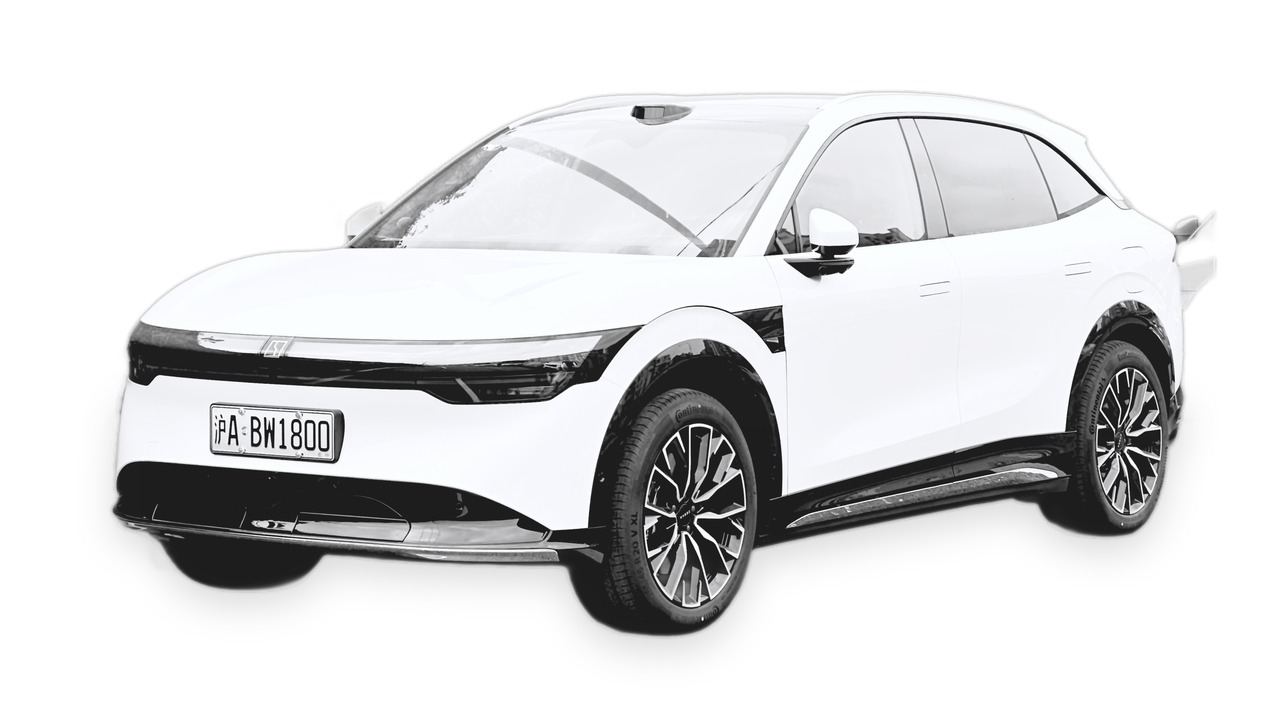
Take the Zeekr 7X as an example. Owners’ groups are flooded with comments about how basic some of its ADAS functions are, with poor lane-keeping and a rudimentary feel to the way the adaptive cruise functions.
The reason for this? Aussie market 7X models are all fitted with an older Mobileye processor, whereas Chinese market 7Xs get a far more advanced Nvidia Orin-X chipset. The difference in TOPS? The Aussie car maxes out at around 22 TOPS, and the Chinese one at 508 TOPS.
MORE: Got questions? Ask a Drive expert (not an AI agent) here
That’s right, the Chinese-market chipset is 23 times quicker than ours. That’s so it can run LiDAR detectors and the full Haohan safety suite, whereas ours – well, they can’t.
And here’s the thing. Because the hardware is deficient, no amount of over-the-air software updates is going to change that.
Zeekr’s working on a fix. The new 7GT wagon gets an export version of the Nvidia Orin-X chipset with one chip rather than the dual-chip Chinese-market cars. That should be good for 254 TOPS. This is likely to be the processing power of the 2027 updated model of the 7X.
With processing requirements going up and up, a future-proofed chipset is going to become an increasingly important buying criterion for EV owners.
Chinese car manufacturers typically need around 250 TOPS to develop a workable level of automation, and around 2500 for supervised self-driving.
XPeng is at or near the forefront of this tech, and its VLA2 supervised self-driving system (still in a trial phase for Australia) may well surpass that of Tesla’s. Regulatory approval is not the work of a minute, but that’s a different story.
Its new XPeng L03 Ultra features a trio of in-house developed Turing AI chips (two for driver assistance and one for the cabin) for a total of 2250 TOPS.
Tesla has long been at the forefront of advanced semi-autonomous driving technology, and tends to do more with less. Across the generations, Hardware 1 managed just 0.256 TOPS in 2014. Intermediate hardware iterations include 21 TOPS for Hardware 2 (2016), 144 TOPS for Hardware 3 (2019), and 300 to 500 TOPS for Hardware 4 (2023).
The forthcoming Tesla Hardware 5 is projected to be good for 2000 to 2500 TOPS. As an aside, neuroscientists reckon the human brain can manage around 1000 TOPS.
The launch of the latest Polestar 3 saw its processor lift in power by a factor of eight compared to its predecessor, future-proofing it for some while.
Of course, much of this is irrelevant if you’re not particularly interested in advanced self-driving capabilities or intelligent ADAS. There are a good number of you out there who want to do the driving yourself, and more power to you.
But if you do want your EV to retain a strong residual value, processing power is becoming an increasingly important metric. That’s because EV buyers often choose their vehicles based on early-adopter technological measures.
Still, it’s somewhat sobering to think of a car as akin to a mobile phone; something that runs out of processing power as it ages and eventually gets passed over for updates, but that’s the way technology is currently progressing.
It won’t stay that way. Like all tech, these technical demands will reach maturity soon enough and plateau. But for the time being, pay attention to that TOPS number. It may become the shorthand for the longevity of your EV.
MORE: ‘What I wish I knew before buying a Zeekr 7X’
The post Is your EV future-proof? The stat you need to know appeared first on Drive.